Chess System Tal 2.02
The modern NNUE engine (UCI protocol). Pick the build that matches your processor — most machines want AVX2; choose AVX512 only if your CPU supports it. ~40 MB each.
All releases & notes on GitHub →Chess engine pioneer · Creator of Chess System Tal
Four decades of computer chess. Founder of Oxford Softworks and creator of Chess System Tal — the engine built to play like Mikhail Tal: bold, sacrificial, alive. Because a chess program should understand the game, not just brute force it.
British chess and games programmer, publisher and entrepreneur, founded Oxford Softworks in Burford, Oxfordshire in the mid-1980s and spent two decades building chess engines — from SuperChess (1982) to the Complete Chess System and, above all, Chess System Tal, designed to play in the romantic, sacrificial style of World Champion Mikhail Tal. Oxford Softworks became a software development, licensing and publishing house specialising in strategy games — Bridge, Go, Shogi and others — and was sold to venture capitalists in May 2000; the chess engine never retired, and Chess System Tal lives on today as a modern neural-network (NNUE) engine.
After the sale Chris retired (sort of) and turned to other pursuits: vegetable patch, beekeeping, alpacas, sheep, pigs, cows and river boating, programming remaining a part-time pursuit. For a time he also served as Chairman of the Parish Council, handing over to the capable hands of Bob Annis in 2009.
In 2010 was the move to a farmhouse in south-west France — bees, honey, vegetable patch, carpentry workshop, generally things rural — until there came AlphaZero and AlphaGo, the big shock from DeepMind that neural nets could do what was thought impossible: play chess above Grandmaster level. So, back to AI and machine learning — that was some catching up to do, discovering the strange thing called NNUE and, of course, what better way to learn than to do it myself. Thus was Chess System Tal NNUE, and the development partnership with veteran chess programmer Ed Schröder of Rebel fame, born.
Lately the road leads east. Since 2025 I've spent more and more of the year in South-East Asia and the Caucasus — new places, new people, the adventure still very much on.
Most engines win by searching deeper and faster. I bet on the opposite: knowledge over brute force. Pack real chess understanding into the evaluation, then let that judgement decide which lines are worth exploring at all. The aim was never just a stronger engine — it was an engine that plays like a daring human master, one that would rather sacrifice and attack than grind out a draw.
Four decades of computer chess, 1982 to today.
An early commercial chess program — the start of a long road.
A popular commercial release from Oxford Softworks.
Continuing the Oxford Softworks chess line.
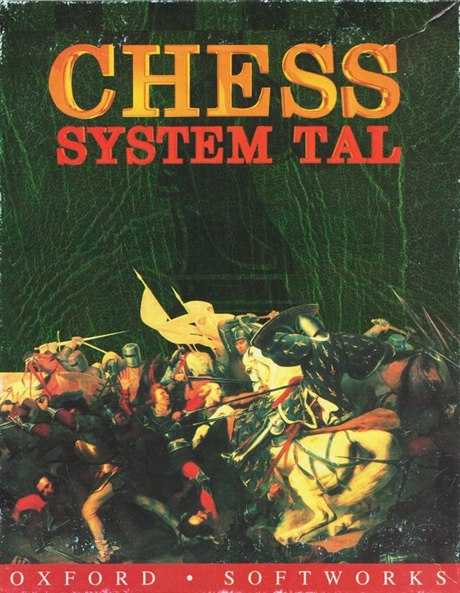
A full chess package for MS-DOS (Amiga in 1994), with its own graphical interface and 2D/3D boards. Preserved today on the Internet Archive.
View on Internet Archive →The original release and its sequel — Oxford Softworks' most daring engines, and the ones that made the name.
A modern revival: a UCI engine in C++ (with Ed Schröder) using a neural-network (NNUE) evaluation, yet still tuned for Tal-style aggression. Rated around 2914 blitz and ranked among the top publicly available engines, with a "Learn Assist" feature that steers the search toward preferred lines.
View on GitHub →Currently in development.
Free to download — the latest Chess System Tal engine and several EPD test suites: some for exhaustive testing of PERFT, and others for use as randomised opening positions for testing with various common chess-odds games.
The modern NNUE engine (UCI protocol). Pick the build that matches your processor — most machines want AVX2; choose AVX512 only if your CPU supports it. ~40 MB each.
All releases & notes on GitHub →Various EPD test suites — position sets for testing and analysing chess engines.
Browse on GitHub →The Universal Chess Interface — the command-line protocol between chess engines and GUIs (original specification by Stefan Meyer-Kahlen).
View on GitHub →For anything about Chess System Tal, Oxford Softworks, or computer chess, the engine lives on GitHub — that's the best place to find me.
Chess System Tal on GitHub